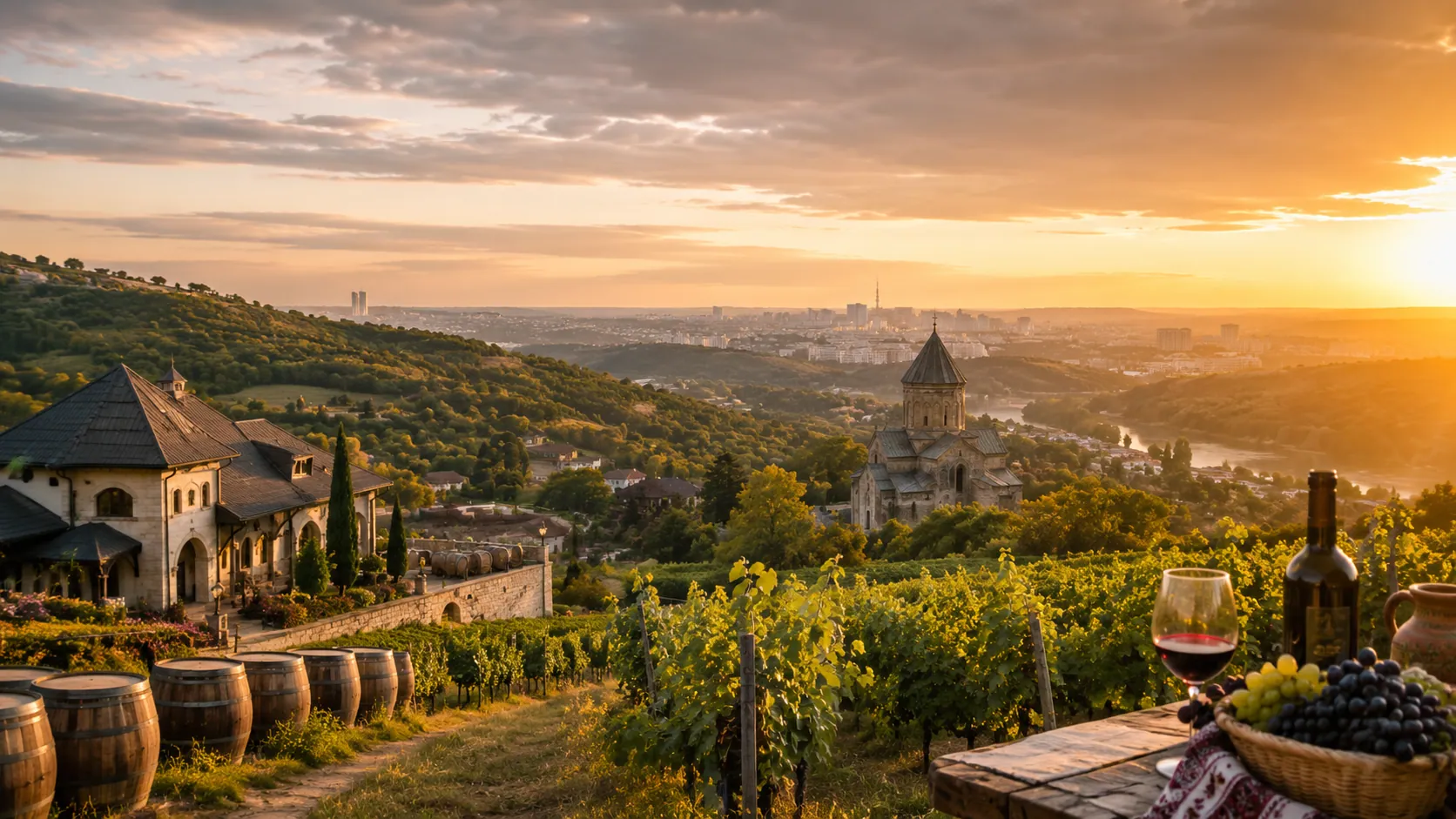
The Republic of Moldova has a continental climate, with cold winters and hot summers, and the gap between months is wide. There is no "good month" in general — there is the right month for your kind of holiday. Here is how the year divides up, by purpose.
March–April: early spring, cheap and unsettled
Early March brings Mărțișor, the first-of-March celebration, followed by the music festival of the same name, which runs for several days in Chișinău. Prices are low and there are no crowds.
The weather, though, is unpredictable: it can be 18 degrees and sunny or it can sleet. Country roads are still muddy and the landscape stays brown until late April, when the orchards come into blossom. The vineyards are bare.
Good for: the city, museums, theatre, cellar tastings (where it is 12–14 degrees year-round anyway). Poor for: nature, photography, walking.
May–June: the best stretch for landscape
May is the month when Moldova looks its best: everything is green, the days are long, temperatures are comfortable and the vineyards are growing fast. June carries on in the same way, with warmer days.
It is the ideal moment for Orheiul Vechi, for the trails in the Codri forest and for the northern reserves — see the nature section. The rock-cut monasteries above the Nistru are at their best now, when the vegetation is fresh but the heat is not yet tiring. Details in the monasteries section.
Good for: walking, photography, families, mixed itineraries. Poor for: anyone coming strictly for the harvest and new wine.
July–August: hot, with water and melons
Moldovan summers are hot, and through July and August temperatures can sit consistently above 30 degrees. At Orheiul Vechi and on the open plateaux there is little shade, so walking is an early-morning or evening activity.
In exchange, this is the water season: the aquatic parks in Chișinău, Bălți and Cahul run at capacity, and the Nistru bank at Vadul lui Vodă fills up. It is also when melons, apricots and peaches ripen, and the markets are at their best. See what to eat in the food section.
Good for: families with children, water parks, markets. Poor for: long midday walks, open-air winery tours at peak hours.
September–October: wine season
This is the period worth aligning your holiday to. September brings the grape harvest — at some wineries you can watch the fruit arriving and the first fermentations — and the weather stays warm, with cool evenings.
The first weekend of October is National Wine Day, held in central Chișinău with dozens of producers present. It is the busiest tourist weekend of the year: capital accommodation books far ahead and prices rise. If you come then, book early — see the accommodation options and arrange your winery tour in advance.
October also brings the best light of the year and coloured hills. The producers are in the wineries section.
Good for: wine, photography, food, couples. Poor for: small budgets and last-minute bookings in the first week of October.
November: the quiet month
The leaves are down, the visitors have gone, prices fall. What remains is the city, the museums, the restaurants and the cellars. It is a good month to see Chișinău unhurried and without competition for bookings — see the capital guide.
December–February: winter and the holidays
Winters are cold, with irregular snow. In tourism terms December is worth it for the carols, markets and holiday traditions, which are well preserved in Moldovan villages. January and February are the emptiest months of the year.
One useful detail: the temperature in the underground galleries is constant all year, around 12–14 degrees. In winter a cellar visit is, paradoxically, less of a thermal shock than in summer.
Good for: traditions, low prices, tastings. Poor for: nature, isolated villages, secondary roads.
The verdict, by type of holiday
- Wine above all: the last ten days of September or the first of October. If you want the festival, the first week of October; if you want quiet wineries, avoid it.
- Nature and walking: May and the first half of June, then October.
- With children: June or early September — warm but not scorching, and without the festival crowds.
- Small budget: November, February, March.
- A balanced first visit: mid-September. You catch the harvest, good weather and still-reasonable prices, ahead of the October peak.