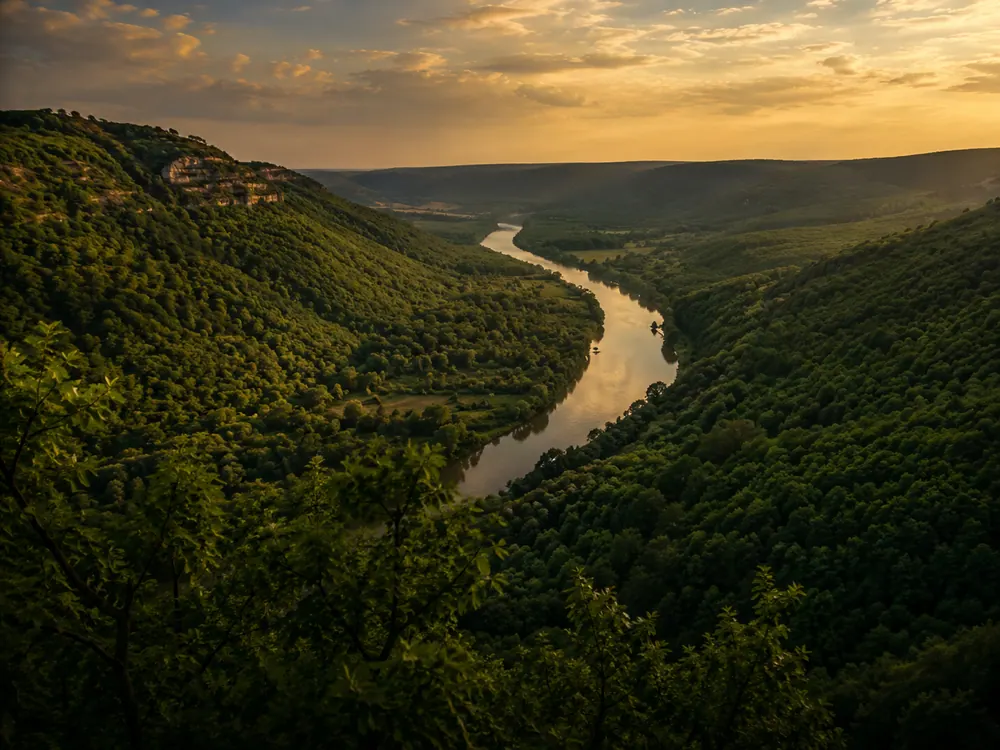
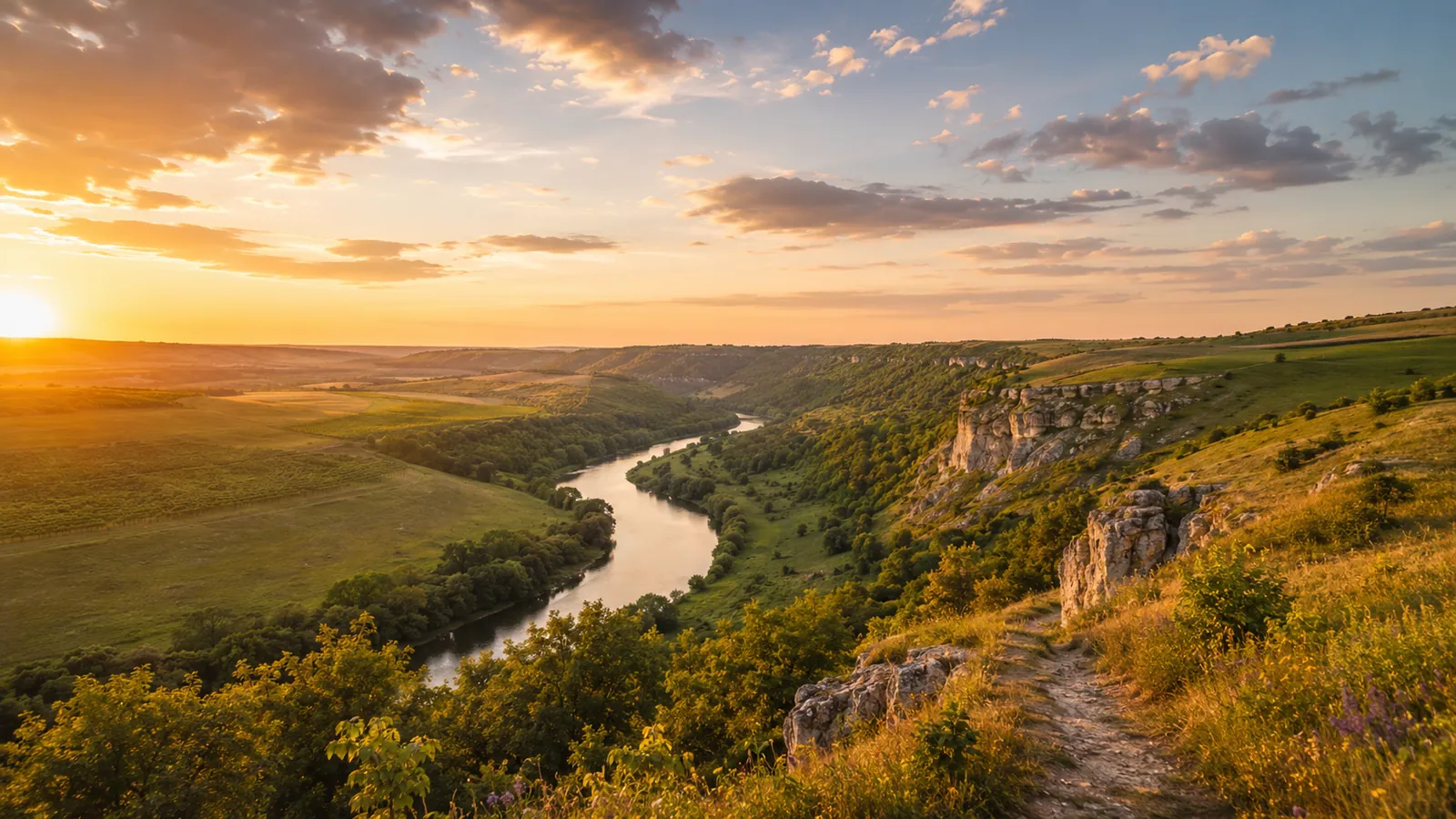
In the Republic of Moldova, the decision about where you sleep changes more than your night-time comfort. It changes how much you drive. Almost everything worth crossing the Prut for — the gorge at Orheiul Vechi, the rock hermitages on the Dniester, the monasteries of the Codri, the wineries of the south — lies outside Chișinău. And if you base yourself exclusively in the capital, you pay the same toll every day: the drive out and the drive back.
Country guesthouses solve exactly that problem.
The practical argument: you save yourself two drives
Take the most common case. You want Orheiul Vechi and one of the monasteries on the Dniester. Based in Chișinău, the day looks like this: an hour north in the morning, a visit, the drive back to the capital, and the next day the same direction again. You have driven the same stretch four times.
With a night spent in the village, the day looks different: you arrive in the afternoon, visit the complex in the evening light, sleep there, and in the morning you are already twenty minutes from the next sight. You have eliminated two long drives and gained the two intervals of good light, when these places look entirely different from how they look at midday.
This is not a romantic argument. It is itinerary arithmetic.
What "rural guesthouse" means here
The category covers fairly different things, and the word alone does not tell you what you are getting. In practice you will encounter three types:
The restored peasant house. A traditional smallholding fitted out for guests — few rooms, a courtyard, sometimes a cellar with home-made wine. Authentic, informal, with simple facilities.
The purpose-built guesthouse. A new or rebuilt building, with several rooms, en-suite bathrooms, a restaurant or a communal dining room. More predictable, less atmospheric.
The tourist complex. A larger establishment, with a leisure area and space for events and groups. Good for extended families, less good if you came for the quiet.
None is better than the others in the abstract. What matters is what you are after: if you want meals at fixed times and your own bathroom, filter for that from the outset.
Where they are concentrated
Of the 90 accommodation establishments listed in our directory, 67 are outside Chișinău — and it is no accident that they cluster in a few areas.
Butuceni and Trebujeni
The two villages in the Răut gorge, right beside the Orheiul Vechi complex. This is the densest rural tourism area in the country and the only one where you can literally sleep inside the landscape you came to see. Details of what you can visit from there are in the dedicated guide to staying near Orheiul Vechi.
The Orhei area
Beyond the two villages, the broader area around the town of Orhei has establishments on the M2 road and its branches. The position is useful if you build your day around the northern axis — Orhei, Curchi, and on towards Soroca.
Lalova and the Dniester bank
Lalova is the reference point for the middle Dniester, close to Țipova and Saharna. The area is the most spectacular and the worst served by public transport — exactly the profile of a place where staying on the spot makes the difference.
Vadul lui Vodă
The shortest distance from the capital, on the Dniester. It has a different profile: it is the beach and weekend area for the people of Chișinău, with heavy seasonal traffic in summer. Good as a base if you want both city and water.
How to choose, concretely
All the establishments in our directory outside the capital have at least 4 stars on Google and over 100 reviews. That filter eliminates from the start any place without a verifiable track record. Beyond it, ask before booking:
- Are meals included or ordered separately? In the countryside there is no restaurant across the road. If your host does not cook, dinner becomes a real problem after 7 p.m.
- Are dietary restrictions catered for? Menus are fixed at many guesthouses; vegetarians and people with allergies need to give notice in advance.
- How do you cover the final kilometres? Some addresses are on unsurfaced roads. That is not a problem in dry summer weather; it can be one after rain.
- Are cards accepted? Many small guesthouses work in cash. Ask, and withdraw lei before you leave the city.
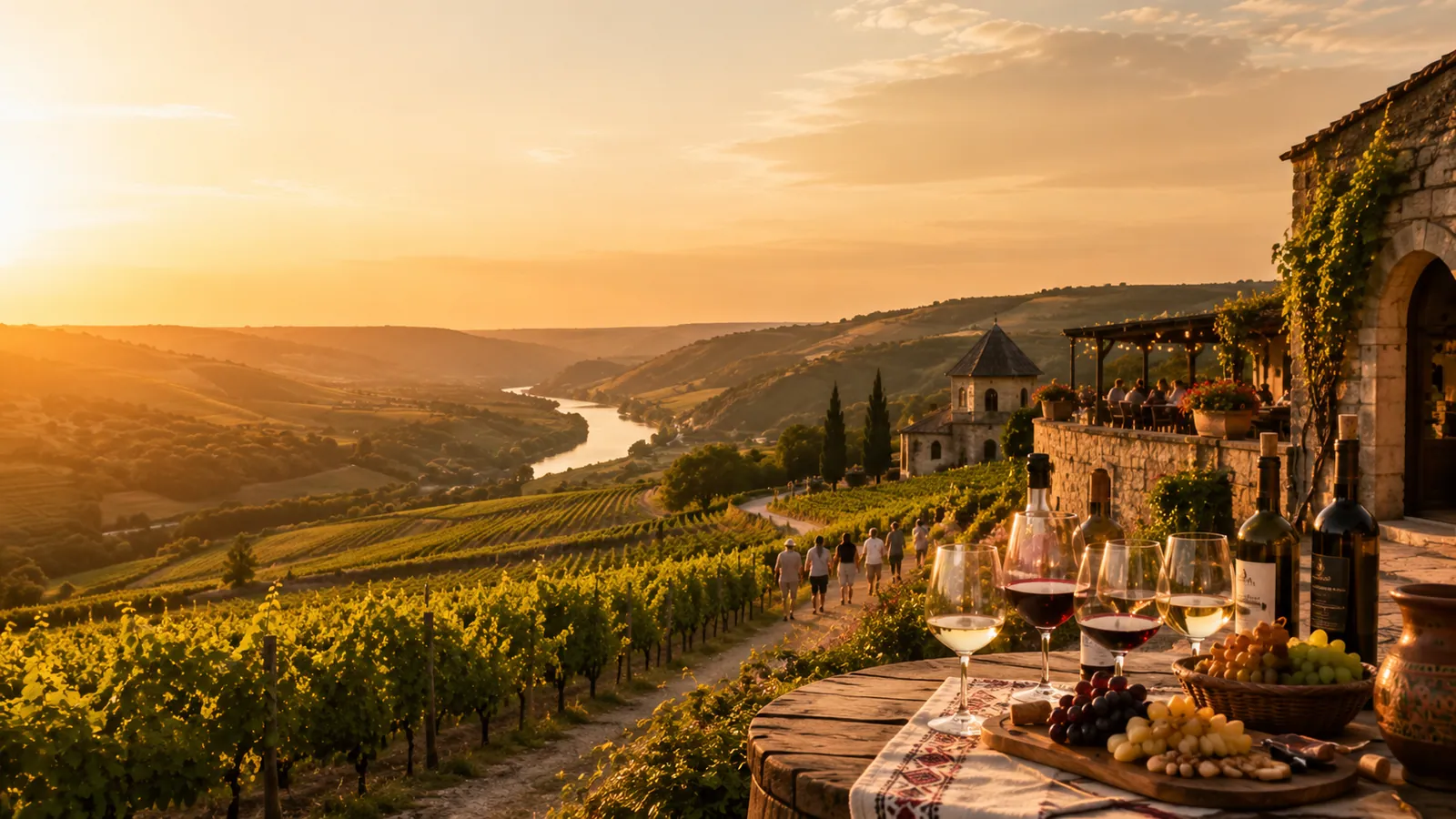
- What happens in the evening? Some hosts organise dinner with produce from the smallholding or a tasting from the cellar; others do not. It makes a big difference to an evening in the countryside.
The food is half the reason
At a guesthouse you generally eat what the smallholding produces and what is in season: plăcinte (filled pastries), zeamă (chicken soup), sarmale (stuffed vine or cabbage leaves), cheese, vegetables from the garden, wine from the cellar. It is not a restaurant menu and should not be judged as one — it is home cooking, with variations from one host to another. The wider culinary context is explained in the gastronomy section; for meals at a restaurant, in the city or along the way, there is the restaurant directory.
One detail worth anticipating: portions in the countryside are large and insistent. If you have also booked lunch somewhere on the same day, recalibrate.
When to book
The busy season runs from May to October, peaking on summer weekends and during festival periods. At Orheiul Vechi, festival days empty the villages of free rooms weeks in advance — if you are aiming for such a date, book early.
In winter, many guesthouses operate at reduced capacity or by request only. Call ahead; do not rely on the availability shown online.
If you are not driving
Country guesthouses almost always assume a car. Public transport reaches the larger villages, but rarely at the hour you need and almost never as far as the gate. If you are not driving, you have two solutions: an organised tour that includes transport and accommodation, or choosing an establishment inside the village rather than on its edge.
The starting point for any option is the same — see where the establishments actually are on the map before you book, not after.