Dubăsari District
Administrative seat: Coșnița
A district on the right bank of the Dniester. The town of Dubăsari is under Transnistrian administration, and the district seat operates in the Coșnița–Cocieri area.
The Dubăsari district (the one under the administration of the Republic of Moldova) lies in the central-eastern part of the country, on the right bank of the Dniester, and forms part of the Centre Development Region. It is a district with a particular administrative situation: following the 1992 conflict, the town of Dubăsari and part of the territory remained under the control of the Transnistrian region, so the seat of the district controlled by Chișinău was established in the village of Coșnița, a unique case in Moldova's administrative organisation. The district borders Criuleni and the Transnistrian region.
Geography
The territory covers about 30,922 hectares on Moldova's central plateau, in the floodplain and on the terraces of the Dniester, with a temperate climate favourable to agriculture. Farmland accounts for a large share of the area. The district covers approximately 309 km², and the population, according to the 2014 census, was about 29,271 inhabitants. The ethnic composition is almost entirely Moldovan/Romanian, with small minorities of Russians, Ukrainians and Gagauz.
Economy
The district's economy is predominantly agricultural, the fertile land of the Dniester floodplain favouring vegetable growing, fruit growing, viticulture and cereal cultivation. The district's villages are known for their production of vegetables and fruit, a significant part of the harvest going to the Chișinău market. Processing of agricultural produce completes the local economy.
What to see
The banks of the Dniester offer picturesque landscapes, and the district's villages preserve numerous historical monuments and churches, as well as the memory of the events of 1992. The settlements along the demarcation line carry particular symbolic weight in Moldova's recent history.
History
The villages on the right bank of the Dniester, such as Coșnița, Pohrebea, Pârâta and Doroțcaia, are documented from the medieval period and formed part of the historical lands of Moldavia. During the armed conflict of 1992 these settlements were at the centre of the fighting, many of their inhabitants opposing the separatist authorities in Tiraspol and remaining under the constitutional administration of the Republic of Moldova. That choice explains the unusual administrative arrangement, with the seat established at Coșnița instead of the town of Dubăsari, which lies on the left bank. Through its vocation for vegetable growing, the landscapes of the Dniester and its unique administrative situation, the Dubăsari district remains a territory representative of the country's eastern area and of its recent history.
What the area is known for
More to see in the area
Key facts
- Type
- District
- Region
- Central region
- Administrative seat
- Coșnița
Detailed statistics (population, area) are updated from official sources (the National Bureau of Statistics).
What to find in Dubăsari District
Everything we have documented here — sights, places to stay, meals and wineries, with real Google ratings.
And nearby, beyond the district border
Places in neighbouring districts, less than 40 km away, if you want to stretch the route.
 Stay6.4 km
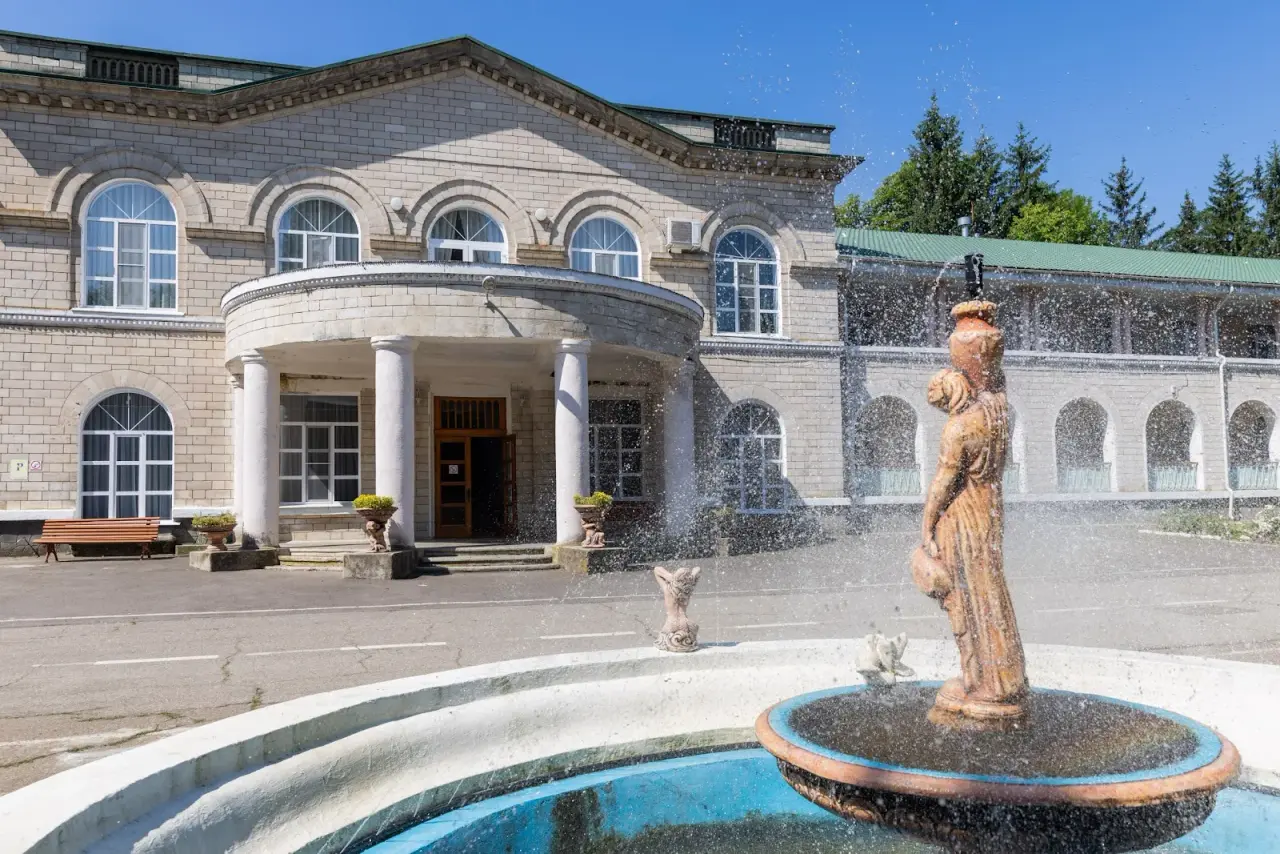
Pensiunea din Holercani
The guesthouse is at Holercani, a village in the Dubăsari district set on the right bank of the Dniester, on one of the finest stretches of the river, with high banks and woodland. It welcomes families with children, and current information can be followed on its own page. No other services are detailed in the public data. Holercani is a good stop for anyone heading up the Dniester from Vadul lui Vodă towards Rezina and the cave monasteries. The area is quiet outside the warm season and, unlike Vadul lui Vodă, stays uncrowded.
See details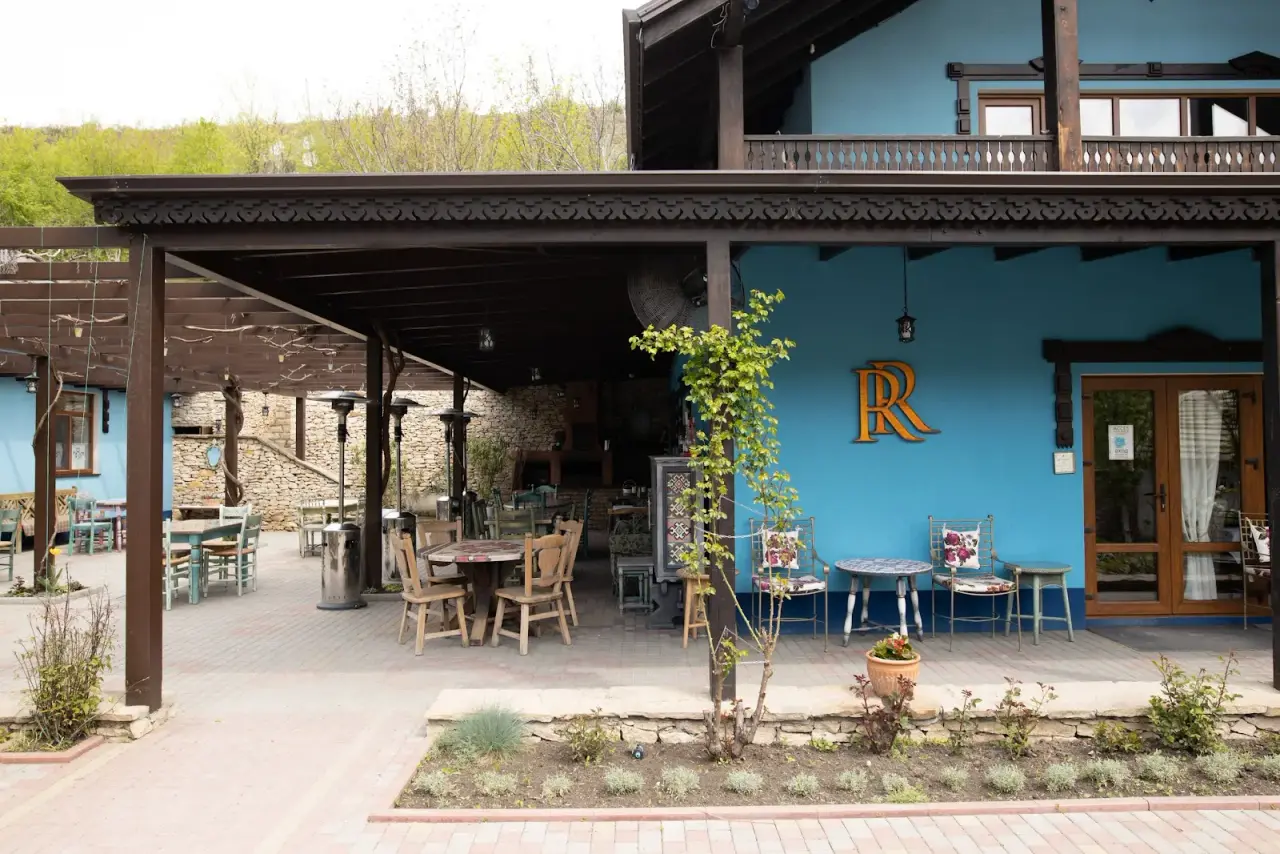 Stay14 km
Resedinta Rotundu
Reședința Rotundu stands on the main road through Butuceni, the village inside the Orheiul Vechi complex. The houses here keep the traditional line, in stone and wood, and the walk to the cave monastery is done on foot. It is a small bed and breakfast, suitable for families with children. Bookings and details can be followed on the property's Facebook page. The real advantage is that you sleep in the village, not in Orhei: in the evening and early in the morning, once the coaches have left, the complex is almost empty and is worth seeing at exactly those hours.
See details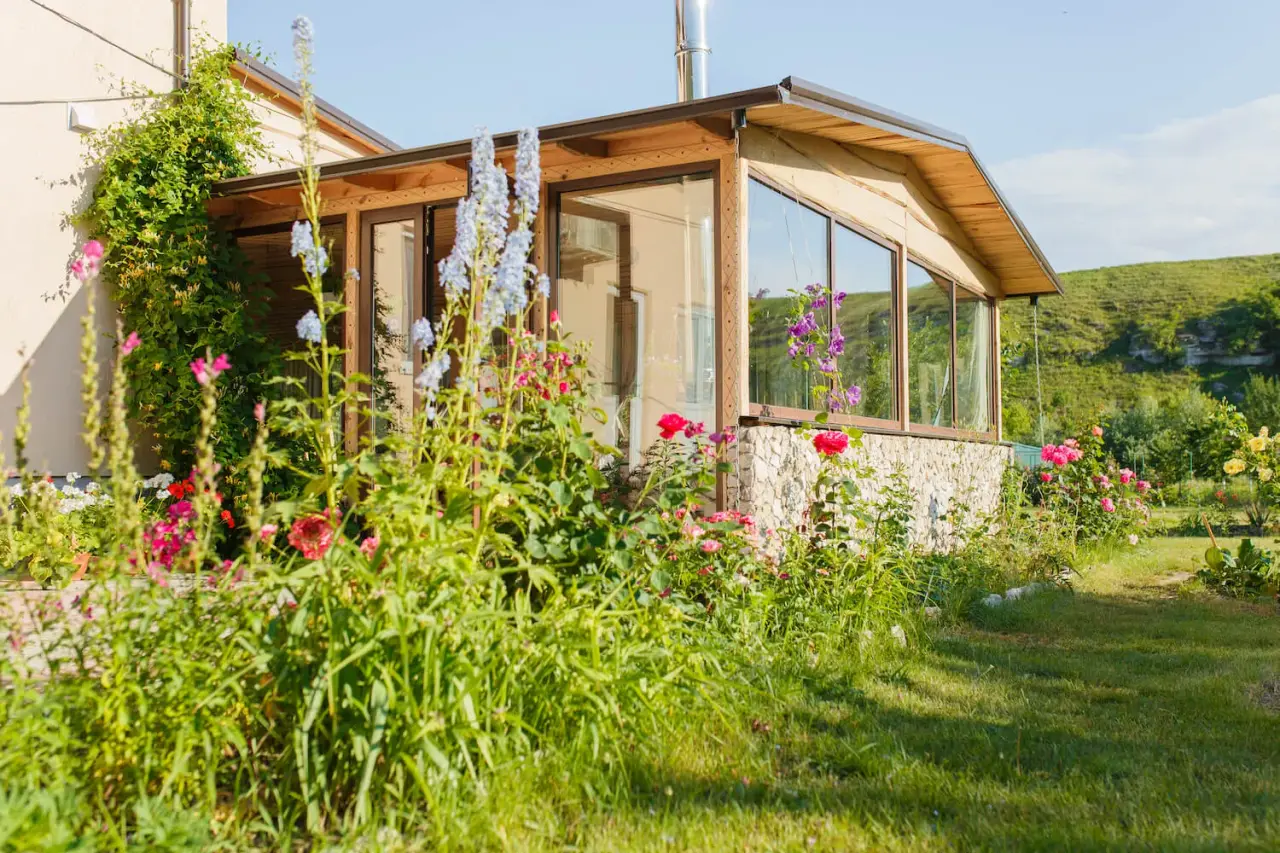 Stay14 km
Pensiunea „Vila Roz”
Vila Roz is at Trebujeni, some 300 metres from the bridge over the Răut, in the Orhei district — that is, at the entrance to the Orheiul Vechi complex, coming in on the road from Chișinău. It is a small guesthouse, and pets are accepted, which greatly narrows the list of alternatives if you are travelling with a dog. The property has its own website for details and availability. From Trebujeni you can walk to the cave monastery and the plateau above the Răut, and the drive to Butuceni takes a few minutes.
See details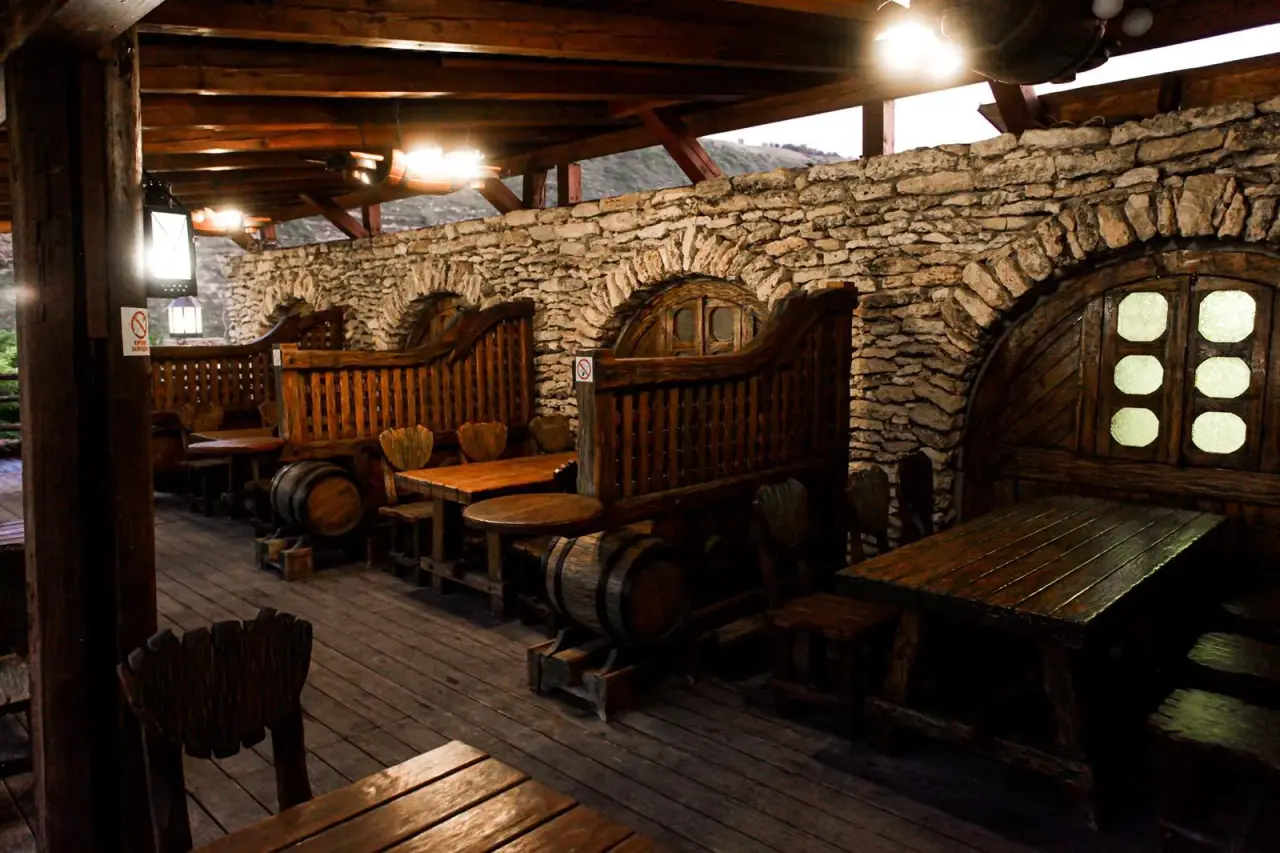 Stay15 km
Villa Etnica
Villa Etnica is at Butuceni, the village in the heart of the Orheiul Vechi complex, between the limestone cliff and the bend of the Răut. In practice you are a few hundred metres from the cave monastery. The place functions primarily as a restaurant, with an outdoor terrace, breakfast served, vegetarian options and bookings possible. It takes groups and families with children, and parking is free, in the yard and on the street. Prices are at the upper end for the area. If you want to stay in the village overnight and catch sunrise over the Răut, it is one of the few addresses.
See details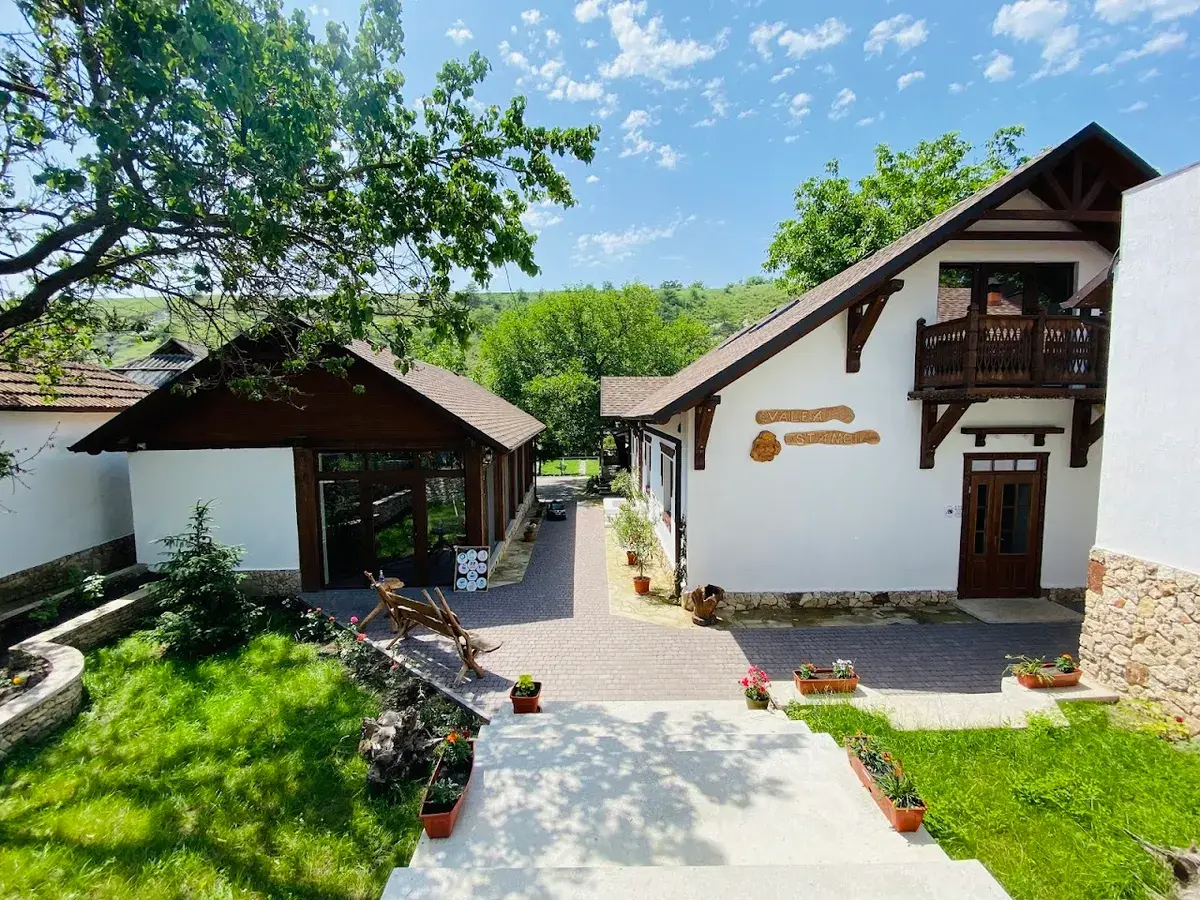 Stay15 km
Valea Stâncii
A guesthouse at the foot of the cliffs on the bank of the Răut, in the village of Trebujeni, near Orheiul Vechi. The atmosphere of a grandmother's house and local traditions.
See details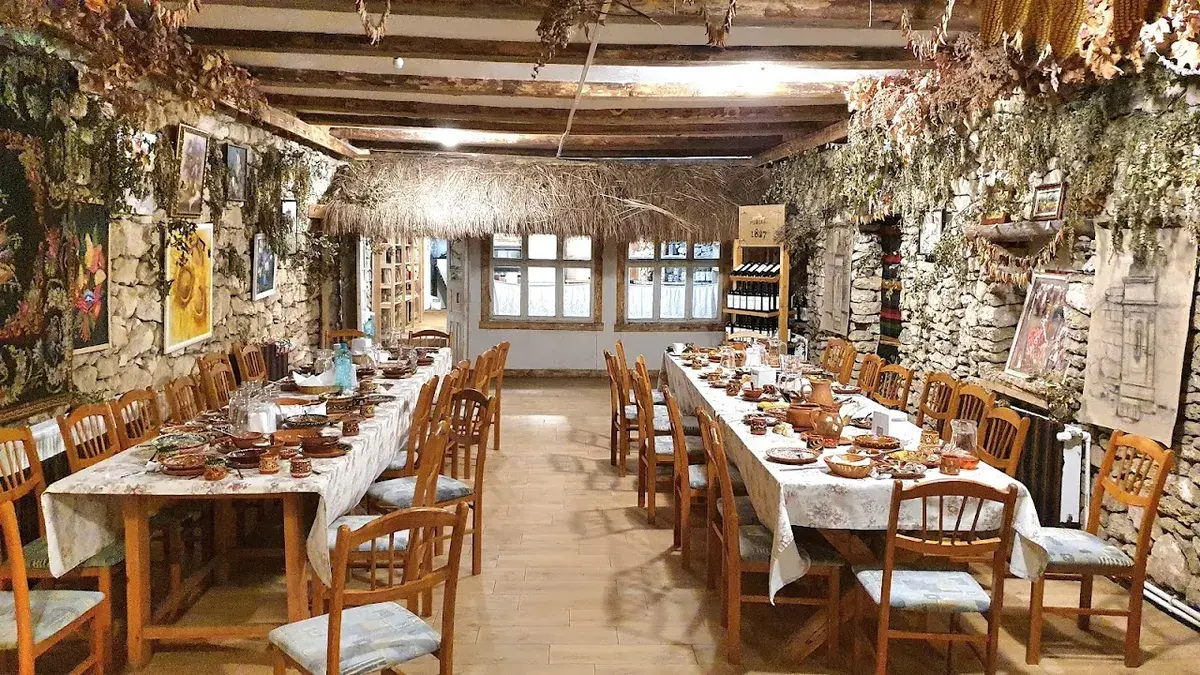 Stay15 km
Eco Resort Butuceni
A traditional guesthouse in the village of Butuceni, near Orheiul Vechi, on the bank of the Răut. Houses in the old style, a restaurant serving food from its own garden, and rural activities.
See detailsWhere to stay in Dubăsari District
Hotels, guesthouses and B&Bs in the area, on one map — prices compared across Booking, Airbnb and other platforms.
Map provided by Stay22. Bookings are completed on the partner platforms.
Frequently asked questions
Questions about Dubăsari District
Which town is the seat of Dubăsari District?
The administrative seat is Coșnița.
Which part of Moldova is Dubăsari District in?
Dubăsari District belongs to the Central region.
What is there to visit in Dubăsari District?
Among the highlights: Satele de pe malul drept al Nistrului.
Plan your visit to the area
Where to stay
Real hotels and guesthouses, with prices compared on the map across Booking, Airbnb and other platforms.
SeeWineries & tastings
From record-breaking underground cities to family wineries. Almost all of them take visitors by appointment.
SeeReady-made itineraries
Day-by-day routes, with real driving distances and the route opening straight into Google Maps.
SeeVisit Dubăsari District
We will build an itinerary around the area that interests you.