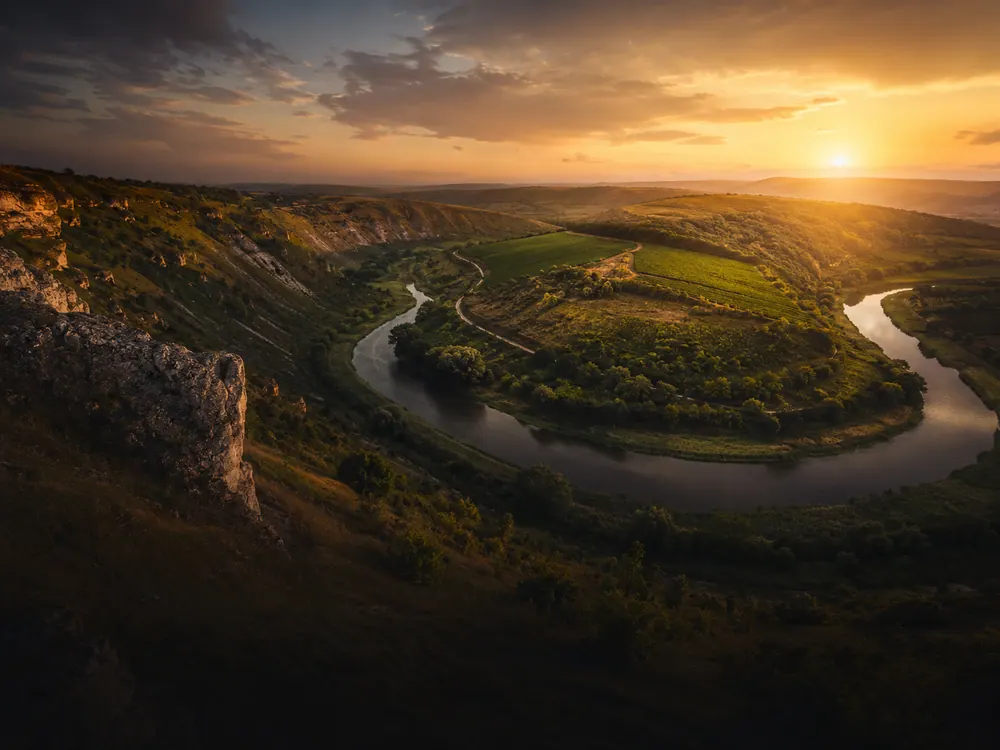
Orheiul Vechi is 52 kilometres from Chișinău, which means around an hour's drive on the M2 route. It is close enough that everybody does it as a day trip, and that is exactly why everybody sees it badly.
The complex has hours when it is full of coaches and hours when there is nobody there. The difference between them is not a matter of luck, but of where you slept the night before.
Why it is worth sleeping in the village
The argument is simple and verifiable on the ground: if you sleep in Butuceni or Trebujeni, you catch the morning and evening light — the two intervals in which the Răut gorge really does look the way it looks in photographs and in which the complex is practically empty.
Groups coming from Chișinău generally arrive in the middle of the day. They leave in the afternoon. That leaves the first hours after sunrise and the last before sunset free. If you are staying five minutes from the entrance, both are yours without effort.
On top of that, you save two hour-long drives and escape the pressure of the clock. You no longer have to calculate whether you can still fit in the cave monastery before heading back.
The figures you need in order to plan
For the Orheiul Vechi complex, the practical reference points are these:
- Entry: 20 lei, reduced fee 10 lei.
- Parking: 30 lei.
- Guided tour, optional: 200–300 lei.
- Recommended visiting window: 8:00–18:00.
- Marked trails: from about 1 km up to 22.5 km.
The guided tour is worth it if you want the archaeological context — the site has very different layers of habitation, and without an explanation you are left with the landscape and nothing more. If you came for the landscape and the monastery cut into the rock, you will manage on your own.
The marked trails are the underrated part. The 22.5 km one is not a stroll — it is a full day, with water, suitable footwear and a check of the forecast. The short ones, of about a kilometre, are easily done before breakfast, which is another argument for staying in the village.
Butuceni and Trebujeni: what is the difference
The two villages are neighbours and both have accommodation, but they are not interchangeable.
Butuceni is the village inside the gorge, closest to the complex and the cave monastery. Stone houses, narrow lanes, a direct view over the bend of the Răut. It is the option with the shortest walk to the site and the most atmospheric.
Trebujeni is the village at the entrance to the area, somewhat larger and better connected by road. It is the more practical option if you are arriving by car, have luggage or want easier access to the main road.
Our directory lists establishments in both villages, as well as in the broader Orhei area. See them all in the accommodation section — filter by area and compare the positions on the map before booking, because "near Orheiul Vechi" covers quite a range of distances.
What to ask before booking
Village accommodation works by different rules from a city hotel. A few checks worth making:
- Is dinner served? There are no restaurants on every corner. If your host does not cook, in the evening you are left with what you brought.
- What time is breakfast? If you want the morning light, you need to be out before the meal, not after. Say so the evening before.
- What is access like by car? The lanes in Butuceni are narrow. Ask where you will actually park.
- Can you pay by card? Cash is frequently necessary. Withdraw lei in Chișinău.
- How many rooms does the establishment have? A house with three rooms and a complex with twenty offer completely different experiences at the same advertised price.
How to build the two days
The version that works best, if you are coming by car from the capital:
Day 1. Leave Chișinău in the afternoon. Arrive in the village, check in, walk one of the short trails to the edge of the plateau for sunset. Dinner at the guesthouse.
Day 2. Head out early, before breakfast — the complex and the cave monastery are yours. Breakfast with your host. Then either take a longer trail, or carry on north to the monasteries in the area, or head back to the capital on the M2.
If you are not driving, the option is an organised tour with transport included — but then you lose precisely the advantage you read this article for, because the tours leave and return on the same day. For ways of travelling independently, see the transport section.
What you eat there
The cooking in the area is smallholding cooking: plăcinte (filled pastries), zeamă (chicken soup), cheeses, seasonal vegetables, home-made wine. Many guesthouses serve meals only to their own guests and only when ordered in advance. If you want to understand what you are ordering and why, the gastronomy section explains the local cooking in detail.
When to come
Late spring and autumn are the best: the light is low, the temperatures allow the long trails, and the villages are not crowded. Summer is hot and the day is long — good for a late sunset, less good for climbing at midday. In winter the landscape is austere and beautiful, but call to check which guesthouses are actually operating.
Festival days are the exception to every rule: the complex fills up, the villages fill up, and rooms are taken weeks in advance. If you are aiming for such a date, book early or deliberately choose another one.