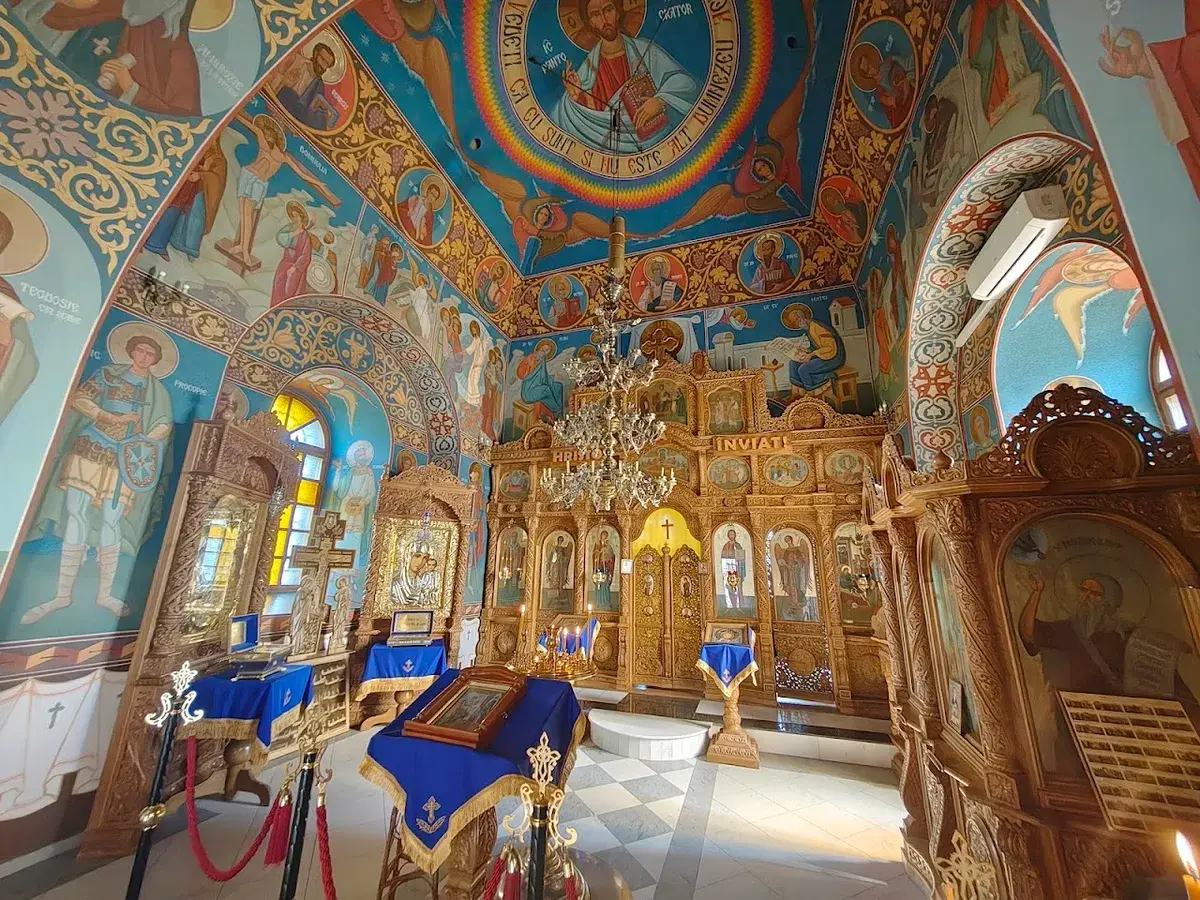
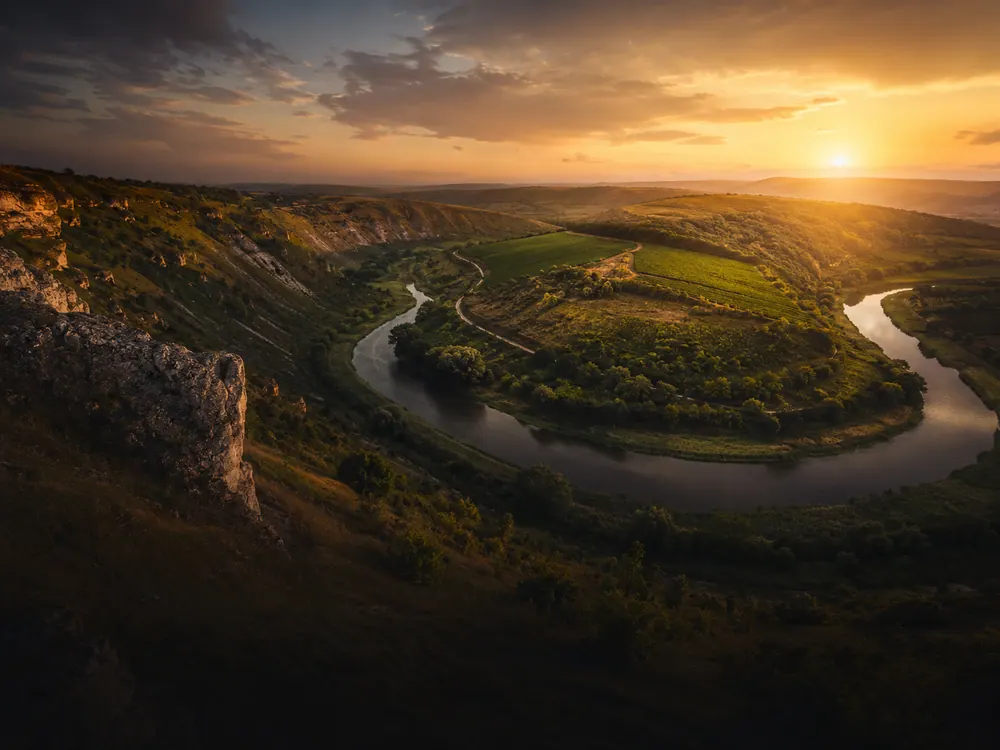
Almost all tourism in Moldova is packed into a triangle of about a hundred kilometres around Chișinău: the wineries, Orheiul Vechi, the monasteries of the centre. The north stays off the route, which is a loss — that is where you find the Dniester with its steep banks, the best-preserved medieval fortress in the country and monasteries cut into the rock, reached along country roads.
It is not an area for anyone who wants comfort and infrastructure. It is an area for anyone who wants to see what Moldova looks like when it is not preparing for visitors.
Bălți — the capital of the north
Bălți is the second-largest city in the Republic of Moldova and calls itself, with some justification, "the capital of the north". It is about 130 kilometres north-west of Chișinău, on the main road north.
It is not a tourist city and does not pretend to be. It is an industrial and university centre, with a large market, a theatre, a few old churches and massive Soviet architecture interspersed with interwar buildings. It is worth stopping for two reasons: it is the best logistical point in the north — here you find accommodation, petrol stations, shops, garages — and it is a real city, not a shop window.
If you want to understand how Moldova lives outside the capital, an afternoon in the centre of Bălți will tell you more than ten museums. Details of the city are on the page devoted to Bălți.
Practically: use Bălți as a base if you are doing the north over two or three days. It is halfway between everything you want to see.
Soroca and the fortress
Soroca is about 154 km from Chișinău, a drive of around 2 hours and 40 minutes. It is on the bank of the Dniester, with Ukraine on the other side of the water — so close that you can clearly see the opposite bank.
Soroca Fortress is the main reason for coming. It is a circular stone fortress, with five towers, built on the river bank — the best-preserved medieval fortress in Moldova and one of the few of its type in Europe. The perfectly circular form is not decorative: it is designed for artillery, with firing angles covering the entire perimeter.
Opening times and access — confirmed figures:
- Open Wednesday–Sunday, 9:00–17:30
- Only from spring until November (closed in winter)
- Entry: 30 lei for adults, 10 lei for children aged 7 to 17
In other words, it is closed on Mondays and Tuesdays, and if you come in January you have driven 154 kilometres for nothing. Check before you travel in any case, as the opening times can change.
From the top of the walls you have the full view of the Dniester and the Ukrainian bank. It is the kind of place where you stay longer than you planned. More about the town and its surroundings is in the Soroca guide.
The Hill of Gratitude — on the height above the town stands a Candle of Gratitude, a monument reached by climbing several hundred steps. The view from the top, over the town and the Dniester valley, is worth the effort. Do not climb it in the midday heat.
Rudi Monastery
Rudi is about 41 km from Soroca, so roughly 45 minutes' drive. It is to the north, towards the Ukrainian border, in a wooded valley.
Rudi Monastery is small, old and entirely unpackaged for tourism. The main church is a good example of traditional Moldavian architecture, and the setting — in a narrow valley, surrounded by forest and springs — explains why it was chosen several centuries ago.
Around the monastery is a nature reserve with limestone gorges, springs and forest trails. You can walk for several hours without meeting anybody.
Practically: the road to Rudi has poor stretches. You do not need a 4x4, but nor do you want a car with very low clearance. Do not count on restaurants in the area — eat in Soroca or take food with you. The phone signal is inconsistent.
For context on the country's other monasteries, the monasteries guide also covers the cave complexes in the centre, Saharna and Țipova, which are on a different route, to the south-east.
The Dniester
The Dniester is the backbone of the north. It flows in from Ukraine, forms the border along long stretches and cuts banks tens of metres high through the limestone.
The bank is dotted with villages that look exactly as they did thirty years ago: houses with a porch, wells with a sweep, vines in the yard. These are not reconstructions, this is life there.
If you go in May or September, you get the best balance of temperature and light.
How to organise the trip
Two days minimum. The north in one day from Chișinău means five hours of driving and three hours of visiting. It is not worth it.
The logical route: Chișinău → Bălți (a stop, possibly a night) → Soroca (the fortress, the Hill of Gratitude) → Rudi (the monastery, the reserve) → back. It can also be done in reverse, with Soroca first, if you leave very early.
A car is all but essential. There is public transport — minibuses from the North Bus Station in Chișinău to Bălți and Soroca — but Rudi and the villages along the bank are practically inaccessible without your own car. See the options in the transport guide.
Accommodation is limited. Bălți and Soroca have options, but few and without luxury. Book ahead, especially in summer. See what is available under accommodation.
An alternative without a car: some tours and excursions from Chișinău cover the north in a one- or two-day format, with transport included. It is the solution if you would rather not drive on secondary roads.
When to go
May–June: green everywhere, good temperatures, long days. Probably the best moment.
September–October: colour, the grape harvest, clear air. Note: Soroca Fortress is open only until November.
July–August: hot, sometimes very hot, dust on the secondary roads. It can be done, but set off early in the morning.
December–March: the fortress is closed, the secondary roads can be difficult. This is not the north's season.
Realistically, what to expect
Few signs in English. Few translated menus. Few places where you can pay by card outside the towns — take cash. Opening times that change without notice. People who help you without being asked.
The north is not comfortable. But it is the part of Moldova that has not changed itself to please anybody, and you feel that as soon as you pass Bălți.