If you have already read about the hermitages cut into the rock on the bank of the Dniester, the Codru monasteries are their exact opposite in feel. There you descend into a gorge and step into a cell hollowed out of limestone. Here you climb through a beech and oak forest and come upon a built ensemble: walls, a bell tower, a range of cells, a large masonry church in the middle of a courtyard. These are foundations, not hiding places.
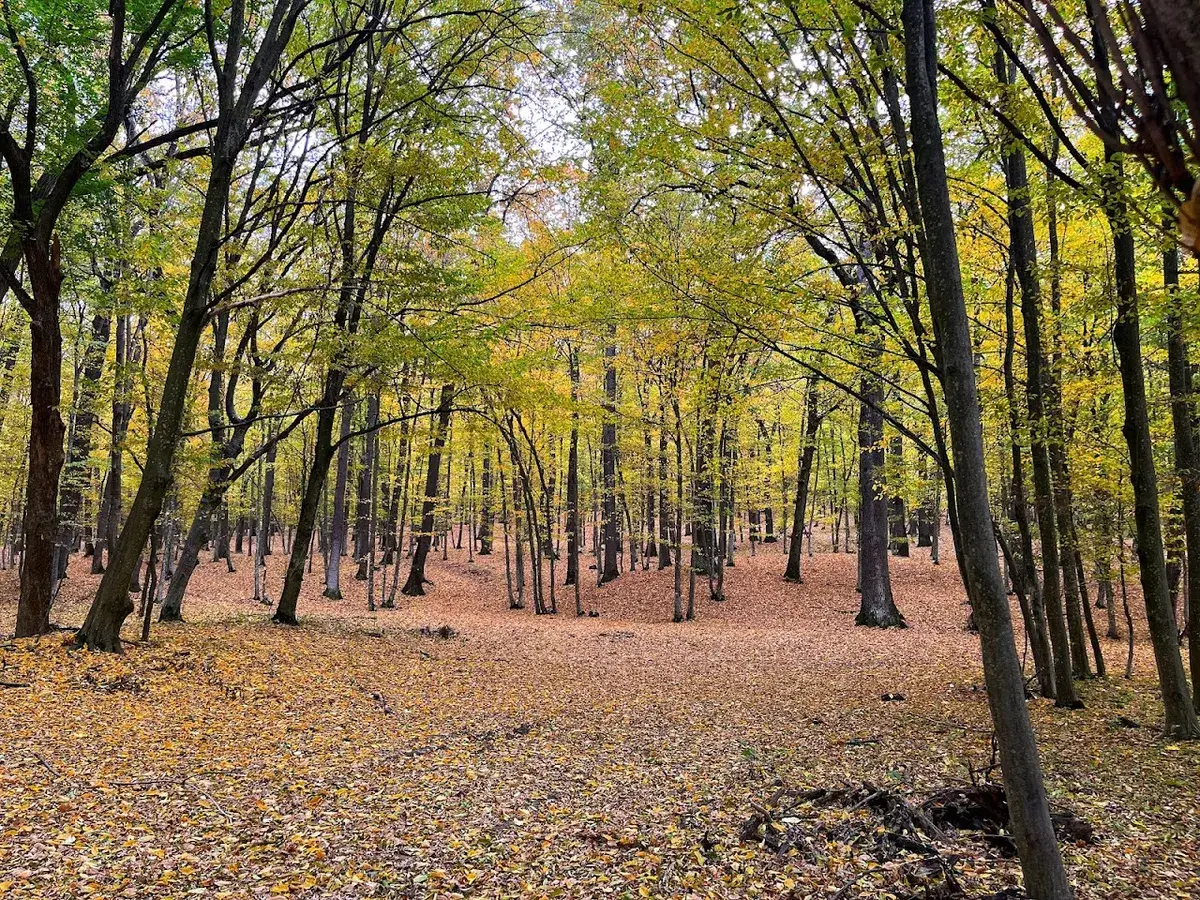
The Codri are the wooded heart of the Republic of Moldova — the hilly area between Chișinău, Călărași and Strășeni, the only part of the country where forest still dominates the landscape. All three monasteries in this article lie within it, which makes them perfectly combinable in a single day by car.
Curchi: the most striking silhouette
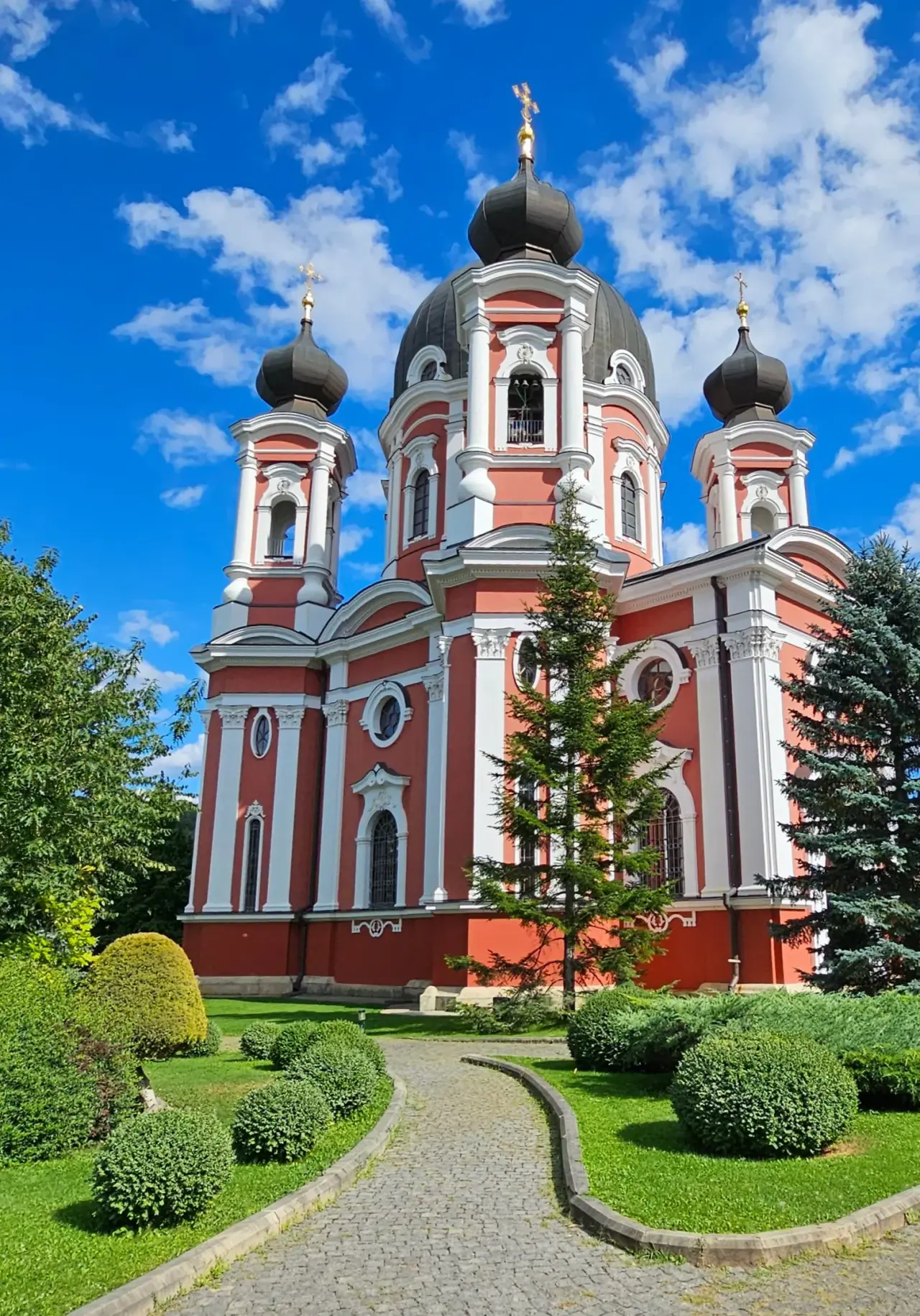
Curchi Monastery lies about 58 km from Chișinău, in the Orhei district — roughly an hour's drive, on surfaced road for almost the whole way. Visually, it is the most impressive of the three.
The ensemble is dominated by the large church, with a massive dome and a mass that resembles nothing else in the area. When you climb the last slope and the complex appears among the trees, you understand why it is photographed so often. The courtyard is wide, with paths, well-kept green spaces and several buildings around it.
Worth knowing before you go:
- The complex went through an extensive restoration in recent decades, after being put to uses other than monastic during the Soviet period. The result is an ensemble that looks good, but with an obvious "rebuilt" quality in many places — do not look for the patina of centuries.
- It is the most suitable of the three for anyone coming with children or elderly parents: the paths are level, the distances short, there are no tracks to climb.
- There is somewhere to park without the drama of other sites.
Curchi links very naturally with Orheiul Vechi, which lies in the same direction. If you leave Chișinău in the morning, you can do both in a day, provided you do not rush either.
Căpriana: the historical weight
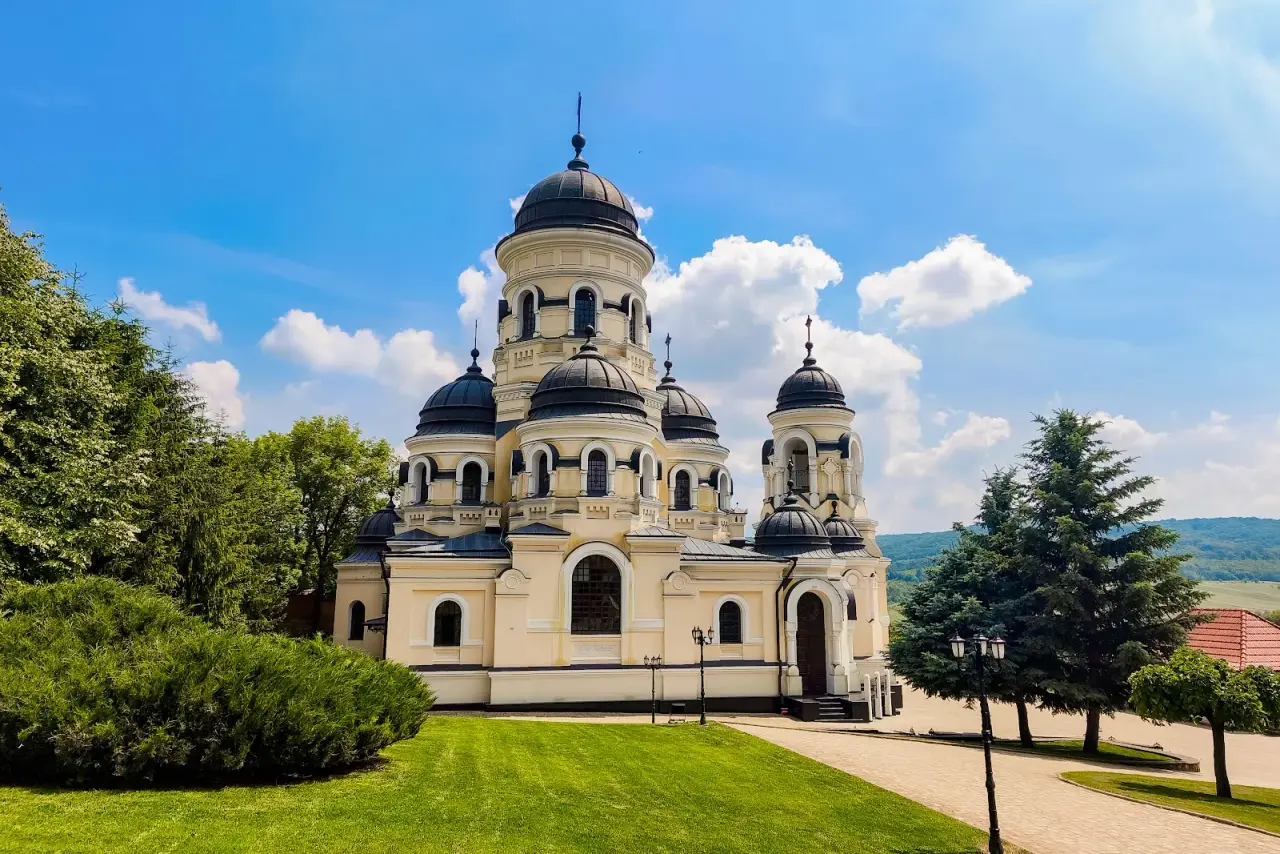
Căpriana is something else. It is not the most spectacular, but it is probably the most important. It is among the oldest monastic foundations on the present-day territory of the Republic of Moldova, and its name comes up constantly in connection with Ștefan cel Mare, who granted it princely support. For many visitors from Romania, that is the argument that counts: it is a point of continuity between the history of medieval Moldavia and the country of today.
The ensemble sits in a broad clearing, surrounded by forest, west of Chișinău, in the Strășeni district. It has several churches within the walls, a monastic cemetery and, nearby, a stretch of woodland worth a short walk after the visit.
Practical tips:
- This ensemble has also been heavily restored. As at Curchi, the atmosphere is one of a well-kept complex, not a romantic ruin.
- There is a spring with a built surround nearby, where almost everybody stops.
- Sundays and feast days are considerably busier. If you want quiet and you want to look at the architecture, go on a weekday.
Hâncu: the most secluded
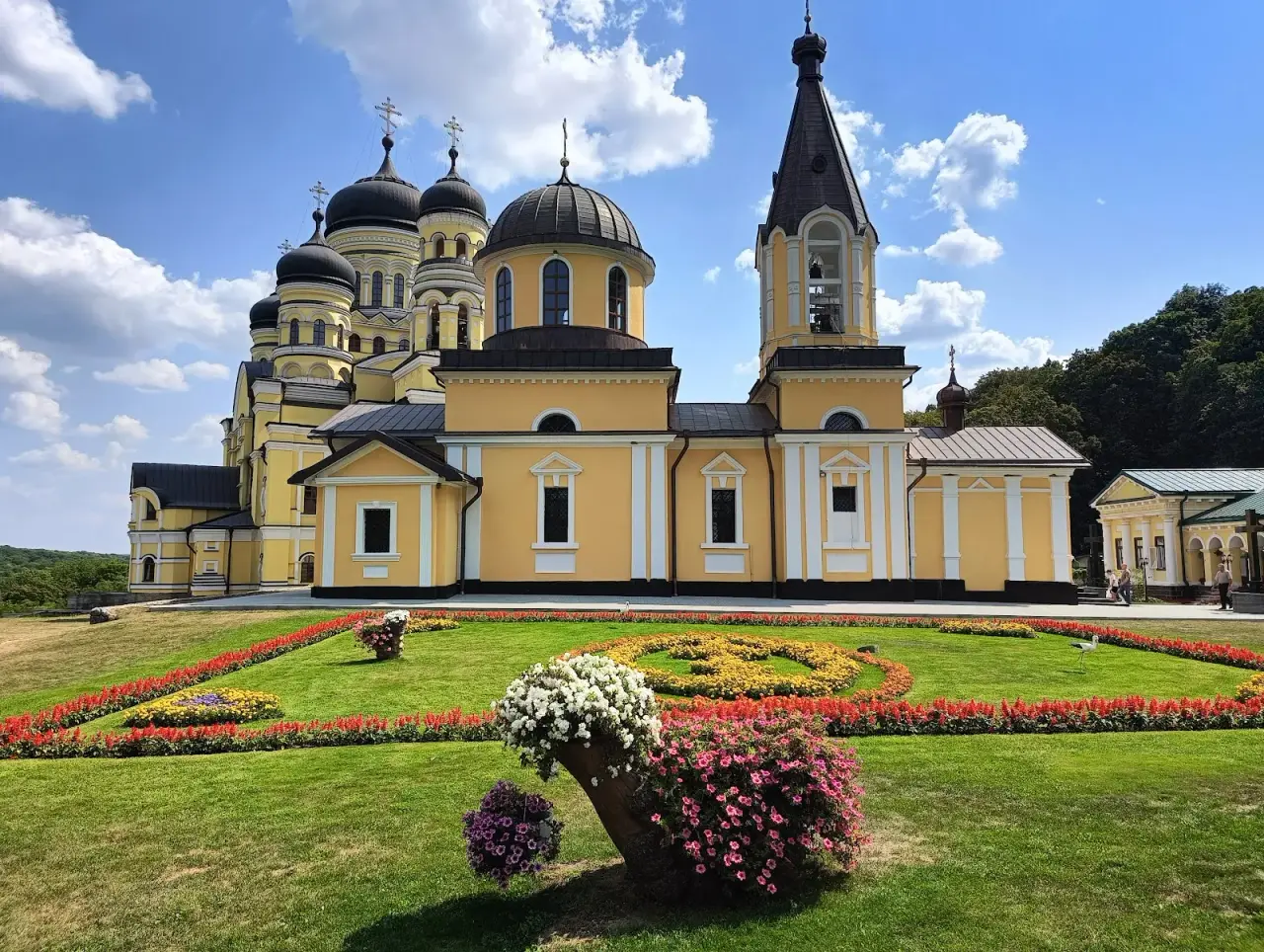
Hâncu Monastery, in the Nisporeni district, is the most "forest-bound" of the three. The access road climbs through a narrow valley, and the complex appears suddenly, in a clearing. It is a convent, very active, with its own smallholding and a courtyard full of flowers in season.
The atmosphere here is visibly different: less monument, more living place. There are people working, you can hear activity, and the quiet is village quiet, not museum quiet. Many visitors consider it the most authentic of the three for exactly that reason.
There is a spring and a recreation area nearby, very popular at weekends.
How to do all three in a day
The logistical problem is that they are not aligned. Curchi is north of Chișinău, towards Orhei. Căpriana is to the west. Hâncu is south-west of Căpriana. You cannot make a clean loop without partly retracing the same road.
The version that works best:
- Morning: Chișinău → Curchi (about an hour). A visit of one to one and a half hours.
- Lunch: back towards Chișinău or a stop along the way. On the road west you have options in the larger villages.
- Afternoon: Căpriana (about 40 km west of Chișinău), then Hâncu.
If you only have half a day, choose Căpriana + Hâncu — they are close to one another and the pairing makes logical sense.
For anyone who wants a broader route, including the cave hermitages on the Dniester, we have set out the options in the pilgrimage guide. And if you want to see how they all sit in relation to the rest of the country, the map is more useful than any description.
What to wear and how to behave
There are no exotic rules, but there are rules:
- Modest dress. Shoulders covered, no very short shorts. On entering the church, women cover their heads — there are usually headscarves at the entrance, but do not count on it.
- Photography. In the courtyard, generally no problem. Inside the church, ask. During a service, no.
- Service times vary from one monastery to another and through the year. We have not included hours here because they change; if you want to catch a particular service, call ahead.
- You do not need hiking boots at any of the three. Comfortable shoes are enough — unlike Țipova, where you need serious footwear.
When to go
The best season is May–June and September–October. In spring, the Codri are green and the forest is full of wildflowers; in autumn, the colours are the main argument. In winter, the secondary roads to Hâncu can be problematic after snow.
In summer, at midday, it is hot and the exposure in the broad courtyards at Curchi and Căpriana is felt. Go in the morning.
Why it is worth it
They are not Voroneț and they are not Putna. They do not have famous exterior frescoes and they do not have the kind of unbroken continuity you find in Bucovina — the Soviet period severed the thread, and the restorations since are recent and show it.
What they do have is context. They are set in the country's only real forest, at short distances from the capital, in a landscape that resembles neither the steppe of the south nor the terraces of the Dniester. For anyone who wants to understand what central Moldova looks like — and not just tick off wineries — this is among the best-spent days available.
It combines excellently with a stop at a winery on the way home. Details of what is open and in which direction are in the wineries and wines section, and for a rental car or a transfer, the transport page covers the options that actually exist in Moldova. The rest of the country's monasteries, including the cave ones, are gathered in the monasteries guide.