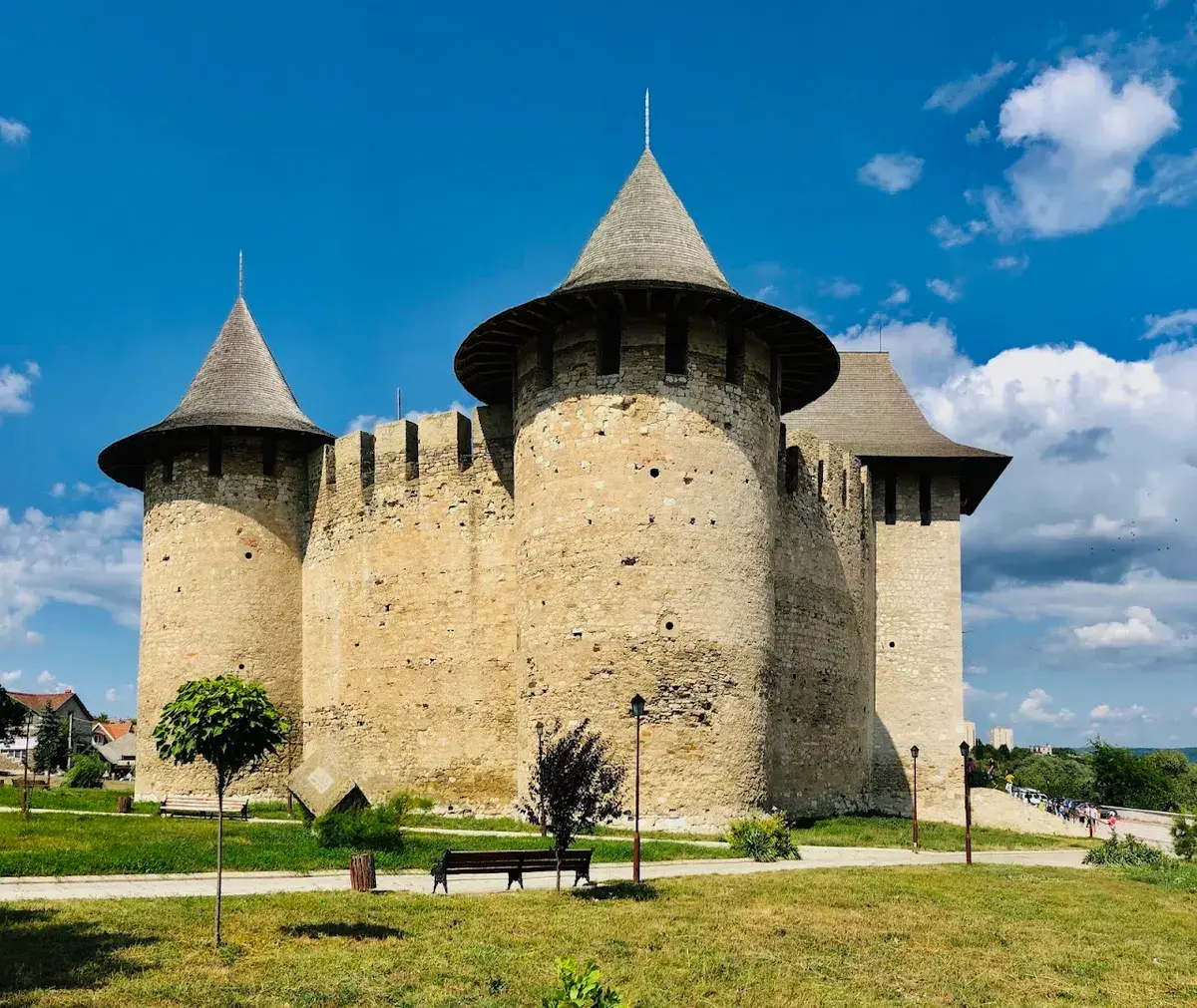
To understand Moldova today, it helps to know a few landmarks. Here is the country's history, in brief.
The medieval principality
The Land of Moldova was founded in the fourteenth century and became one of the most powerful principalities in south-eastern Europe. Its high point came under Ștefan cel Mare, who ruled for almost half a century, between 1457 and 1504, won military victories against the Ottomans and founded numerous churches and monasteries. After his death, the principality gradually came under Ottoman influence.
Bessarabia
In 1812, the Russian Empire annexed the eastern part of the principality, between the Prut and the Dniester, calling it Bessarabia. It remained under Russian administration for over a century, with a policy of Russification, but the population kept its language and traditions.
Union and the Soviet period
In 1918, the Sfatul Țării voted for the union of Bessarabia with Romania. In 1940, following the pact between Nazi Germany and the Soviet Union, the region was annexed by the USSR, which created the Moldavian Soviet Socialist Republic. What followed was industrialisation, but also deportations, famine and a fresh wave of Russification, including the imposition of the Cyrillic alphabet on the Romanian language.
Independence
On 27 August 1991, the Republic of Moldova declared its independence. The first years were marked by the conflict in Transnistria and by economic difficulties. Since 2014 the country has had an Association Agreement with the European Union, and since 2022, candidate country status.
The landmarks in brief
- 14th century: the founding of the Land of Moldova
- 1457-1504: the reign of Ștefan cel Mare
- 1812: annexation of Bessarabia by the Russian Empire
- 1918: union with Romania
- 1940: Soviet annexation
- 1991: independence of the Republic of Moldova
Why it matters to a traveller
This history explains why Romanian is spoken on both banks of the Prut, why you see Soviet architecture in Chișinău, and why the monasteries have been through so many transformations. More in the history section.
Traces of history you can see today
Moldova's past is not only in books. The fortresses at Soroca and Tighina recall the medieval principality; the monasteries founded by the ruling princes are still active; and the broad boulevards, apartment blocks and monuments of Chișinău speak of the Soviet period. Even the language tells a story: the return to the Latin alphabet in 1989 was a key moment of national reawakening. And the museums in the capital, from the history museum to the ethnography museum, tie all these eras into a single narrative. With these landmarks in mind, every place you visit takes on another meaning.