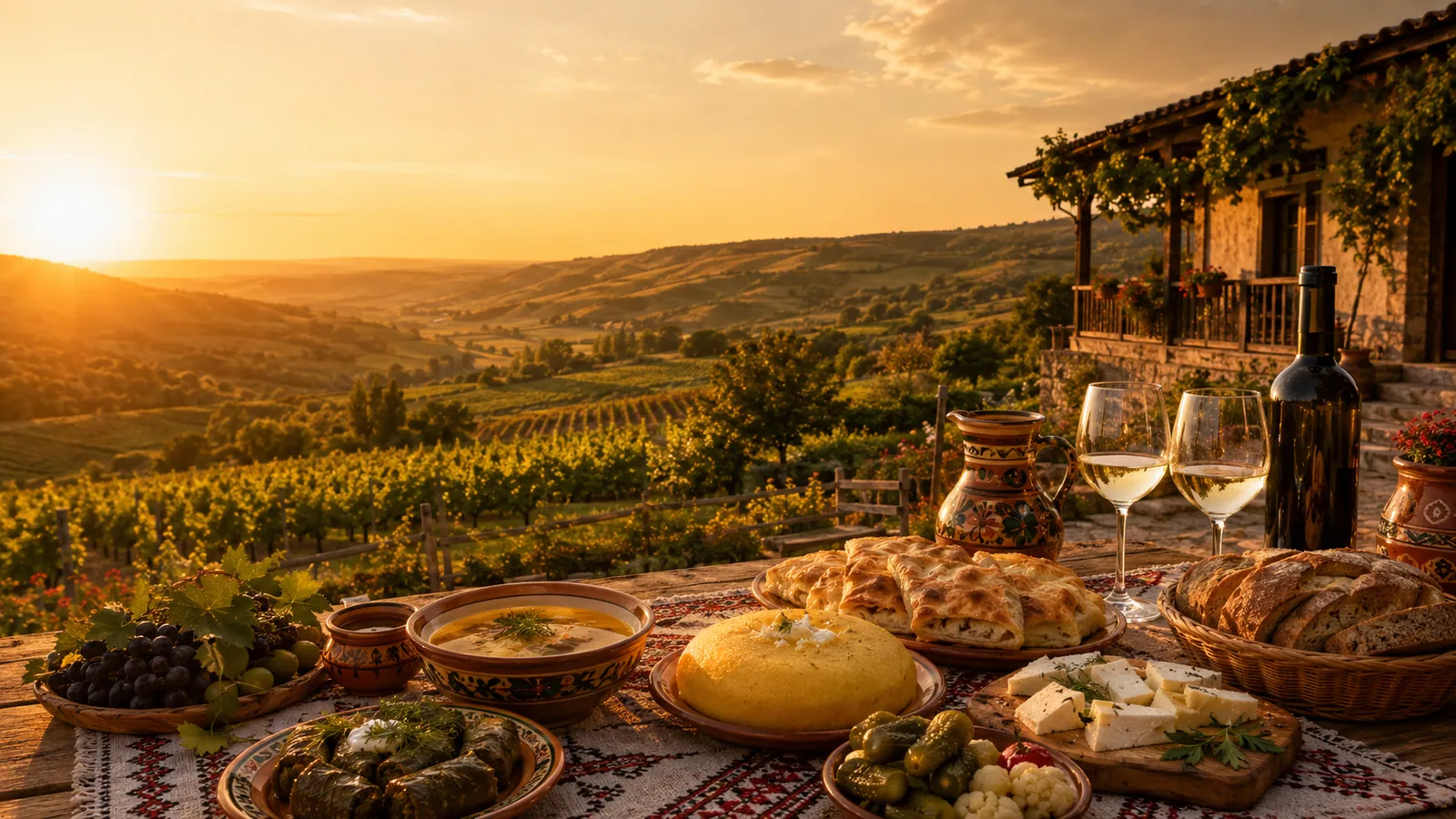
A first meal in a new country is a decision, not a list. Moldovan cooking is generous and heavy, and if you order everything at your first dinner, the evening ends early. Below is the order worth approaching it in, with explicit recommendations for each situation.
If you only have one meal: placinte and zeama
Zeama is the soured chicken soup with home-made noodles that appears on most menus serving local food. It is light, it does not floor you, and it is the best entry point for someone who has no idea what to expect.
Placinte are the other compulsory reference. They are made with cheese, cabbage, potato or apple, and the difference between a good one and a mediocre one tells you immediately how serious the place is.
Verdict: if you have a single meal in Moldova, order zeama and a portion of placinte. You have covered the essence without filling up.
If you have several days: the right order
Day 1 — light. Zeama, placinte, sheep's cheese with pickles. You get into the rhythm without loading up.
Day 2 — the classics. Mamaliga with cheese and sour cream, sarmale in vine or cabbage leaves, coltunasi. This is the core of the home kitchen.
Day 3 — heavy. Country roast and racituri. These are feast-day dishes, substantial, suited to a long lunch rather than a dinner before a drive.
What to order at a winery versus in town
At a winery the menu is built around the wine: grilled meat, cheeses, dishes that support the tasting. At restaurants in the capital you find both traditional cooking and modern versions with more controlled portions.
The recommendation: schedule the heavy meals at lunch, outside the city, where you also have time to move afterwards. Keep dinners in the capital lighter.
What to drink
House wine turns up often at guesthouses and family tables, but it has none of the consistency of a winery bottle — it varies enormously from household to household. In a restaurant, ask for a native variety: Feteasca Neagra, Rara Neagra or Viorica tell you more than a well-made Cabernet. The full list is in the varieties section.
Divin is the country's wine distillate and is drunk at the end of a meal, not as an aperitif. Fruit brandy is the homemade alternative, stronger and less predictable.
In autumn, ask for must. It is available for only a few weeks, non-alcoholic at first, and it is the one drink you cannot taste in any other season.
Special cases
Vegetarian. It works better than expected: placinte with cabbage or potato, mamaliga with cheese and sour cream, cheese coltunasi, pickles, salads. Still, confirm the ingredients, since some dishes use a meat base.
Children. Mamaliga with cheese and sweet coltunasi almost always work. Apple placinte are the safest dessert option.
Sensitive stomach. Skip racituri and fatty roasts at the first meal. Zeama, baked placinte and cheeses are the gentle route.
Allergies. The kitchen uses a lot of egg, dairy and flour. Ask explicitly, because menus do not always flag allergens.
Where the food is most authentic
Not necessarily in the rustic-decor restaurants in the centre. The best traditional cooking usually appears at guesthouses in the districts, where they cook for a small number of tables, and at the central market, where you buy cheeses, pickles and fruit straight from producers.
If you want one rule to remember: order little at the first meal and a lot at the third. The reverse order is the mistake almost everyone makes. The rest of the context on individual dishes is in the gastronomy section, and if you want a meal tied to a visit, winery excursions usually include lunch.