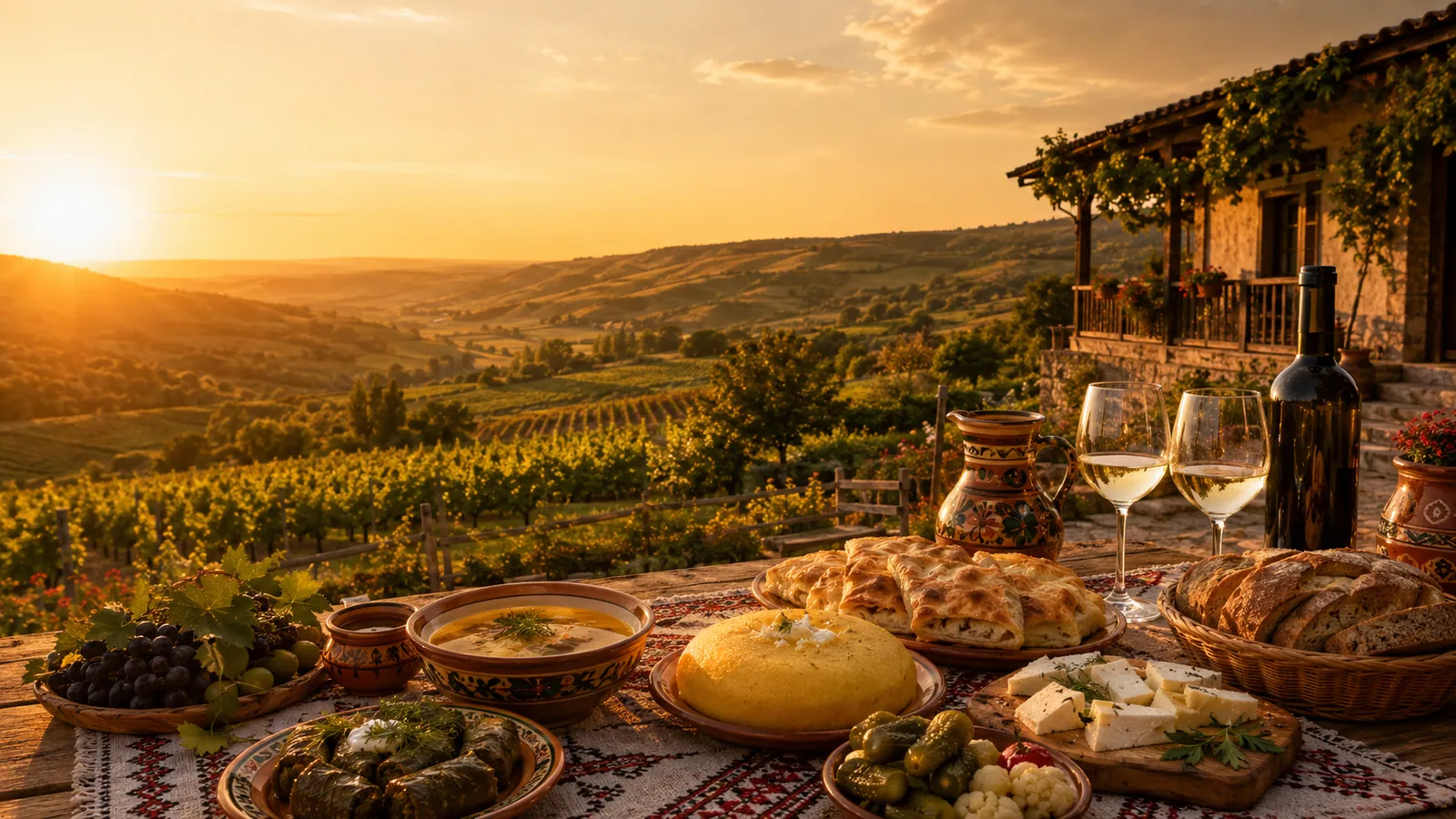
Moldovan cooking is country cooking, with Romanian, Turkish, Ukrainian and Russian influences. Portions are large, the ingredients local and seasonal, and a glass of wine is never missing. Here are ten things to try on a first visit.
Dishes
- Plăcinte — thin pastry filled with cheese, potato, cabbage or apple, baked or fried. The signature dish, good at any hour.
- Zeamă — chicken soup with home-made noodles and lovage, soured with borș. It is said to be a hangover cure as well.
- Mămăligă — densely boiled maize meal, served with sheep's cheese, sour cream and pork crackling. Once the poor man's food; today a national point of pride.
- Sarmale — minced meat with rice, in vine leaves in summer or pickled cabbage leaves in winter, simmered slowly for hours.
- Colțunași — dumplings filled with cheese, potato or sour cherries, with sour cream on top.
- Răcituri — meat in aspic, served cold, a fixture on the festive table in winter.
Produce
- Sheep's cheese — salty, aromatic, made at the sheepfold; it goes with mămăligă and with white wine.
- Pickles — cucumbers, green tomatoes and cabbage in brine, part of any winter meal.
Drinks
- Divin — Moldovan brandy, distilled from wine and matured in oak barrels; the country's own name for this type of drink.
- Home-made wine — made on the smallholding, offered to guests straight from the cellar. Almost every rural family has its own.
What goes with what
The rule is simple on the spot: heavy food with red, light food with white. A Fetească Neagră sits well beside sarmale and meat, a Fetească Albă or a Viorica beside plăcinte and cheese. You cannot go wrong letting your host choose.
Where to try them
The best places are the traditional restaurants in Chișinău and meals at country guesthouses, where the cooking is done as at home. Do not miss the Central Market either, for produce straight from the growers. To understand how it all fits together, read about Moldovan cuisine.
Desserts and sweets
A Moldovan meal rarely ends without something sweet. Look for pumpkin plăcintă, fluffy doughnuts, alivenca (a cheese cake) and home-made preserves of green walnuts, sour cherries or rose petals, served by the spoonful alongside coffee. At festive times, cozonac and plaited colaci appear, baked to old recipes.
A note on portions
One thing will surprise you: the quantities. Moldovan hospitality is measured in full plates, and refusing food can seem impolite. Come hungry, eat slowly and leave room for dessert and for the glass at the end.